
GOHIGHLEVEL AGENCY FOR COLORADO
GoHighLevel Agency for Colorado Businesses: No-Call and AI-Ready GHL
As a remote GoHighLevel agency Colorado companies rely on, GoHighLevel USA builds GHL accounts around three sets of state rules. They are the no-call list, the privacy act and the new automated-decision rules.
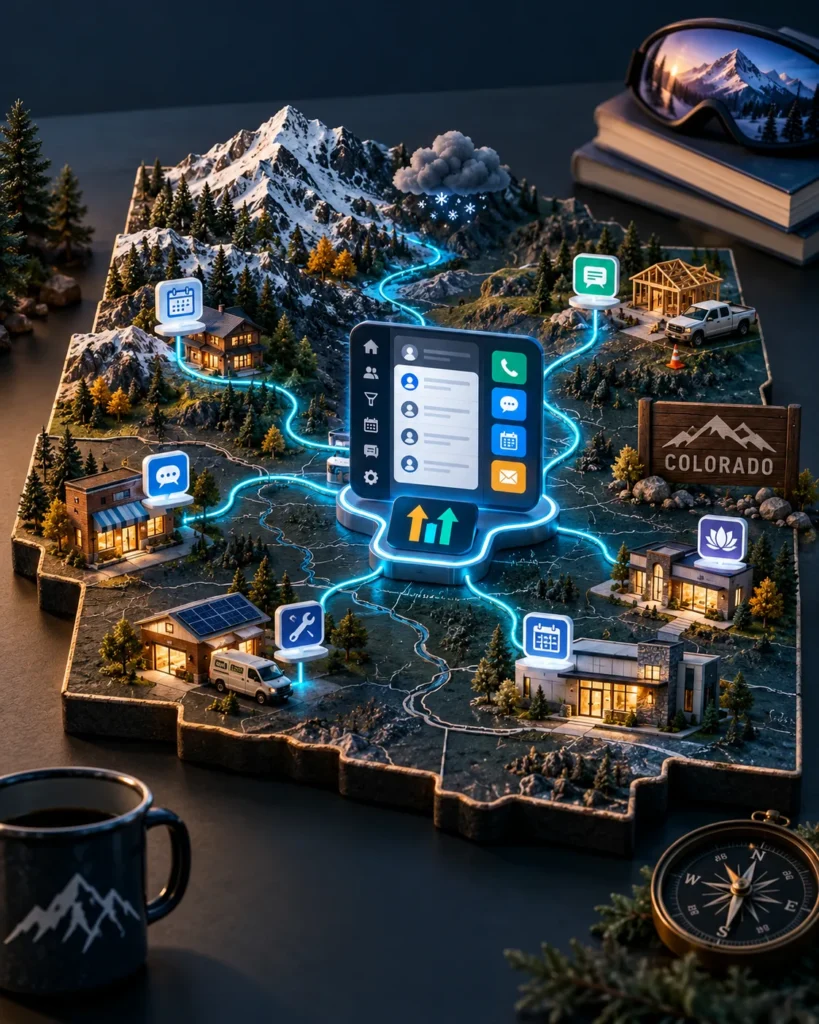
Colorado’s No-Call List Act Covers Text Messages
The Colorado No-Call List Act sits in Part 9 of Article 1, Title 6 of the Colorado Revised Statutes, starting at section 6-1-901. Its definition of a telephone solicitation, as published on the state program's site, reaches voice, fax and data communication. That includes text messages sent to a wireless phone when the goal is to sell, rent or invest.
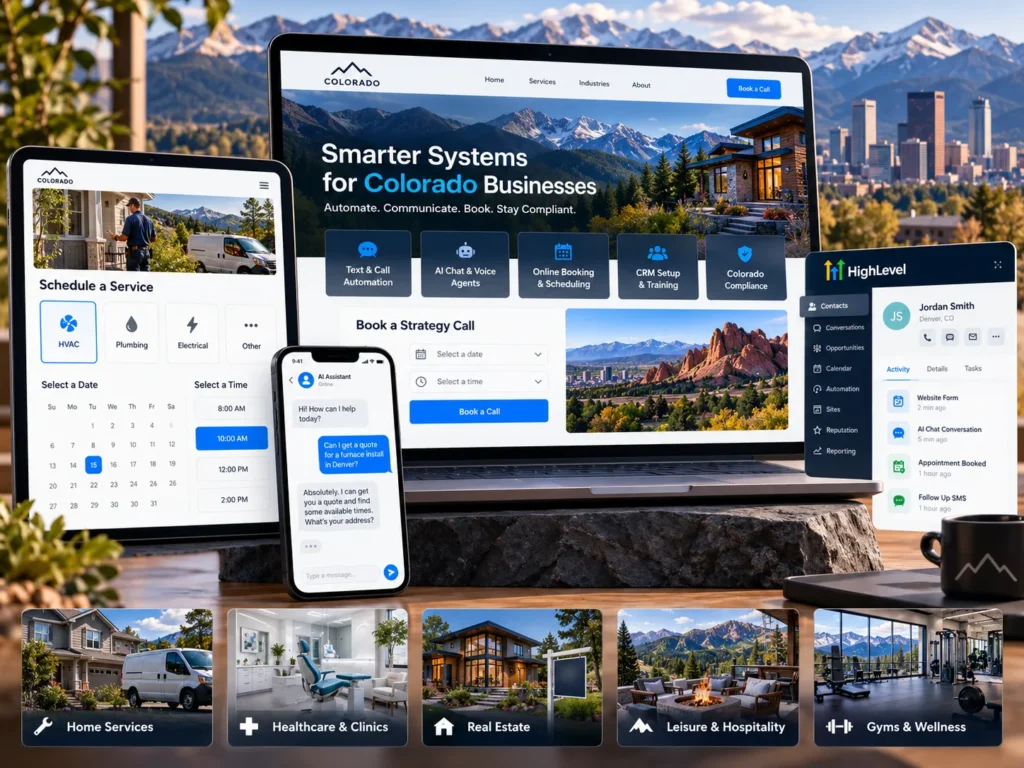
Section 6-1-904 bars solicitations to residential and wireless subscribers who have added their number and ZIP code to the Colorado list. Sellers may not block caller ID, and they must refresh their copy of the list within thirty days after each calendar quarter begins.
The act carves out three kinds of contact: calls the consumer invited or permitted and an established business relationship from the past eighteen months. The third is the thirty days after a consumer asks about buying, unless they say stop sooner. The program site adds that business phone and fax numbers are outside the law.
Violations count as deceptive trade practices under the Colorado Consumer Protection Act. The state cannot bring an action for fewer than three violations a month. A seller with written procedures in place before a mistake has a defense.
A closer look
Two Separate Colorado Registrations for Telemarketers
Using the Colorado no-call list starts with registering with the program’s administrator under the Public Utilities Commission and paying an annual fee. The program site says fees can run from $0 to $500 depending on how many people the company employs. That registration is required even if a list broker scrubs for you.
A second filing comes from the Colorado Telemarketing Fraud Prevention Act, sections 6-1-301 to 6-1-305. The Attorney General’s telemarketing page says a commercial telephone seller must register at least ten days before doing business. Registration costs a $200 first-time fee and a $100 annual renewal, or the seller can file a claim of exemption.
Which of these apply to you is a question for your attorney. Our part as your GoHighLevel agency Colorado team is to make the account provable. It shows when each contact opted in and when the list was last refreshed.
What you get
What a GoHighLevel Agency Colorado Build Covers
Each account starts with the state rules that affect texting, calling and AI, then moves on to pipelines and pages. A GoHighLevel agency Colorado build covers list scrubbing, text-aware consent and privacy opt-outs. AI agent disclosure, a Mountain time clock and Front Range pipelines complete it.

Colorado List Scrubbing
Imported and purchased lists are checked against the state no-call list and the national registry before any sales text or call goes out.

Text-Aware Consent
Forms and booking pages carry consent wording that names your business, since Colorado counts text messaging as telephone solicitation.

Privacy Opt-Outs
We add privacy notice links and a request path, and flag where your site must honor the Global Privacy Control signal Colorado recognizes.
Read our privacy policy →
AI Agent Disclosure
Chat and Voice AI agents open by saying they are automated, and they hand off to a person for lending, housing or hiring questions.

Mountain Time Clock
Account, calendars and workflows use Denver time, with contact-level zones for out-of-state leads, so reminders land at sensible hours.
Front Range Pipelines
Pipelines for home services, clinics, real estate and leisure businesses from Fort Collins down to Pueblo and across to Grand Junction.
From the Colorado AI Act to SB 26-189
Colorado’s first AI statute, SB 24-205, was signed in May 2024. A 2025 special-session bill, SB 25B-004, moved its start date to June 30, 2026. In May 2026 the legislature went further: SB 26-189 repealed and reenacted those provisions as rules for automated decision-making technology.

The new law targets technology that materially influences consequential decisions about education, employment, housing, lending and financial services, insurance, health care, and essential government services. Deployers must give consumers a prominent notice and explain the system’s role within thirty days after an adverse outcome. They must also offer correction and human review on request.
Developer duties begin January 1, 2027, the Attorney General enforces the law, and until 2030 a business gets sixty days’ notice to cure before suit. A separate 2026 bill, HB 26-1263, adds duties for operators of public conversational AI services, including telling users they are talking to AI. Its requirements start January 1, 2027.
For most GHL users the practical reading is simple: a booking or FAQ bot should say it is automated. It should not be the thing deciding who gets a lease, a loan or a job. Whether either law reaches your bot depends on definitions your counsel should check.
Colorado Privacy Act Duties on Forms and Sites
The Colorado Privacy Act took effect on July 1, 2023. It applies to businesses that target Colorado residents and meet one of two tests. They either process the personal data of more than 100,000 consumers in a year or earn revenue from selling data about 25,000 or more.
Covered businesses must honor rights to access, correct, delete and port data. Consumers can also refuse the sale of their data, its use for targeted ads, and some profiling. Since July 1, 2024 they must also accept the Global Privacy Control signal and explain in their privacy policy how they handle it.
Most small service companies fall below those thresholds, but agencies and multi-location brands often do not. We map which GHL fields hold personal data so a deletion or access request can be answered from one place.
Side by side
How a GoHighLevel Agency Colorado Account Is Configured
This table maps each Colorado rule to what it touches and the GHL setting we use. It covers the No-Call List Act, the Telemarketing Fraud Prevention Act, the new AI bills and the Colorado Privacy Act. The last column shows the setting we apply in the account.
Colorado rule
What it touches
GHL setting we use
No-Call List Act
Sales calls and texts to listed numbers
Scrubbed imports, consent capture on every form, opt-outs kept with Do Not Disturb on
Telemarketing Fraud Prevention Act
Commercial telephone sellers
Records of consent and list refresh dates ready for your filing
SB 26-189 and HB 26-1263
AI in decisions and public chatbots
Bots identify as AI and hand off high-stakes questions to staff
Colorado Privacy Act
Personal data of Colorado residents
Mapped data fields, privacy notice links, GPC duty flagged for your site
Federal sales-call hours
When calls and texts go out
Workflow time windows run on each contact’s time zone
HighLevel workflows can hold texts, emails and calls until an allowed window opens, using the contact’s time zone and falling back to the account’s. A STOP reply switches on Do Not Disturb for that contact, and we leave those records in place rather than deleting them. Repairs for rejected texting campaigns go through our GoHighLevel A2P help service.
Mountain Time, Front Range Metros and Colorado Industries
Colorado runs on Mountain time and, unlike most of neighboring Arizona, switches to daylight saving time each March and back in November. We set the account to Denver's zone, and calendars follow it through both changes. Federal rules keep sales calls between 8 a.m. and 9 p.m., judged by the consumer's local clock.
Bureau of Labor Statistics data lists Colorado metro areas from Denver-Aurora-Broomfield and Colorado Springs to Fort Collins-Loveland, Boulder, Greeley, Pueblo and Grand Junction. Its August 2026 figures put trade, transportation and utilities first by payroll jobs, with professional and business services next. Leisure and hospitality holds a sizable share.
We usually build for home service firms, clinics like those in our industry snapshots, property managers, and tour or recreation outfits. If you also sell into Phoenix, our Arizona setup explains why its clocks drift from Denver’s every summer. Our locations page covers the remaining states on our list.
This is general information, not legal advice; confirm with counsel.
Is this for you?
Which Colorado Businesses We Build GHL For
This remote service suits Colorado companies that sell by text, phone and online booking and want the state rules handled at setup. It fits teams texting or calling Colorado consumers, using AI chat or voice agents, or collecting enough data to fall under the privacy act. Home services, clinics, real estate and leisure businesses fit well.
✓
You text or call Colorado consumers and need the state no-call list handled
✓
You want an AI chat or voice agent answering Colorado customers
✓
Your website collects enough Colorado data to fall under the privacy act
✓
You run home services, a clinic, real estate or a leisure business
✓
You prefer a remote partner to an office visit
Questions and answers
GoHighLevel in Colorado: Questions, Answered
Straight answers before you book a call. Have a question that is not covered here? Ask us directly.
Does the Colorado no-call list apply to text messages?

Yes, according to the statute text published by the state program. The Colorado No-Call List Act defines telephone solicitation to include text messaging sent to a wireless phone to sell goods or services. We treat sales texts to Colorado numbers like calls, which means consent first and a list check for anything cold.
How often must I check the Colorado no-call list?
Section 6-1-904 says sellers must update their copy within thirty days after the start of every calendar quarter. The program releases updated lists each quarter to registered telemarketers. We note the refresh date in the account so your team can show when the last scrub happened.
Is the Colorado AI Act still in effect?
Not in its original form. SB 25B-004 delayed SB 24-205 to June 30, 2026, and SB 26-189, signed May 14, 2026, repealed and reenacted it as rules for automated decision-making technology in consequential decisions. Developer duties start January 1, 2027. Confirm with counsel how the new version affects your tools.
Do I need to tell Colorado customers my chatbot is AI?
We recommend it for every Colorado account. HB 26-1263 requires operators of public conversational AI services to disclose that users are talking to AI from January 1, 2027, and SB 26-189 requires notices where automated systems shape consequential decisions. Your counsel can confirm whether your bot falls under either.
Is my small business covered by the Colorado Privacy Act?
Probably not, unless it crosses the thresholds: processing personal data of more than 100,000 Colorado consumers in a year, or earning revenue from selling data about 25,000 or more. Employee and job-applicant data does not count. Many local service businesses fall below, but growing brands should check.
Do you have an office in Denver?
No. GoHighLevel USA serves Colorado remotely and lists no Denver address. Meetings run by video call during Mountain time business hours, and your account, logins and data remain yours from day one. Our done-for-you GoHighLevel setup page lists what a full build includes.
Ready when you are
Work With a GoHighLevel Agency Colorado Businesses Can Trust Remotely
Set up a free strategy call and we will audit your Colorado consent records, no-call scrubbing and AI agents. Prefer chat? Our WhatsApp number is +1 (681) 276-7045.
or call (681) 276-7045