
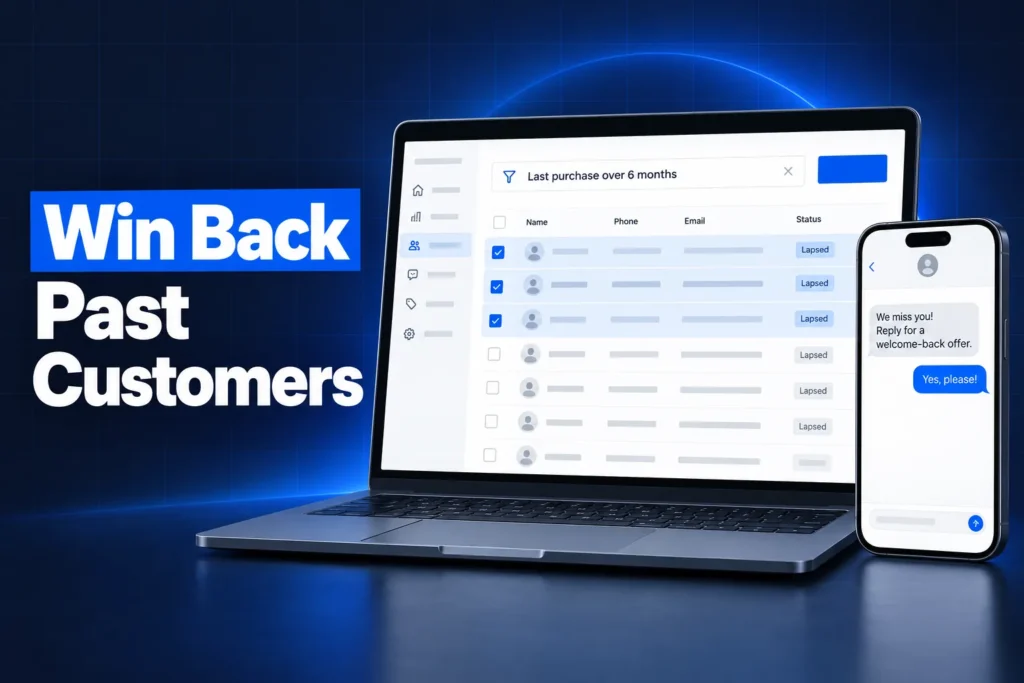
A win back campaign is a short series of SMS and email messages sent to past customers who stopped buying, with one clear reason to come back now. It works because these people already know you. The best ones target lapsed customers who gave consent, lead with a personal note and stop as soon as someone replies or opts out.
This guide explains who belongs in a win-back list, how to check consent before you text old contacts, message and offer examples by industry, when to use SMS, email or both, and how to measure the revenue a campaign brings back. It is written for US service businesses running their CRM in GoHighLevel.
What is a win back campaign?
A win back campaign is a targeted outreach sequence aimed at customers who bought from you before but have gone quiet for longer than your normal buying cycle. Its goal is one reply, booking or repeat purchase, not brand awareness, so every message points to a single next step.
Win-back sits next to two related ideas that people often mix up:
- Win-back: past customers who paid you at least once and then lapsed.
- Lead reactivation: old leads who asked about your service but never bought.
- Re-engagement: subscribers who still buy now and then but stopped opening your emails.
The difference matters because the message changes. A lapsed customer can be reminded of a result they already had. A cold lead needs a reason to trust you for the first time. In GoHighLevel both groups live in the same CRM, so the first job is to separate them with tags, custom fields or pipeline stages before any message goes out.
Who should a win-back campaign target?
A win-back campaign should target customers whose last purchase, visit or appointment is older than your normal repeat cycle, who still have valid consent, and who left on neutral terms. Customers who complained, asked to stop or never had a usable phone number or email should be excluded.
“Lapsed” depends on the business. A dental practice may treat a patient as lapsed after missing a routine recall. A home service company may look at the time since the last tune-up. A med spa may use the gap since the last treatment. Pick the window that matches how often a happy customer normally comes back.
Segments that make the message easier to write
- By last service: “you had a furnace tune-up with us” is more relevant than “we miss you”.
- By value: past high-value customers may deserve a personal call or a stronger offer.
- By time lapsed: someone gone for a few months needs a nudge; someone gone for years needs a reintroduction.
- By channel consent: SMS consent and email permission are tracked separately, so build each list on its own.
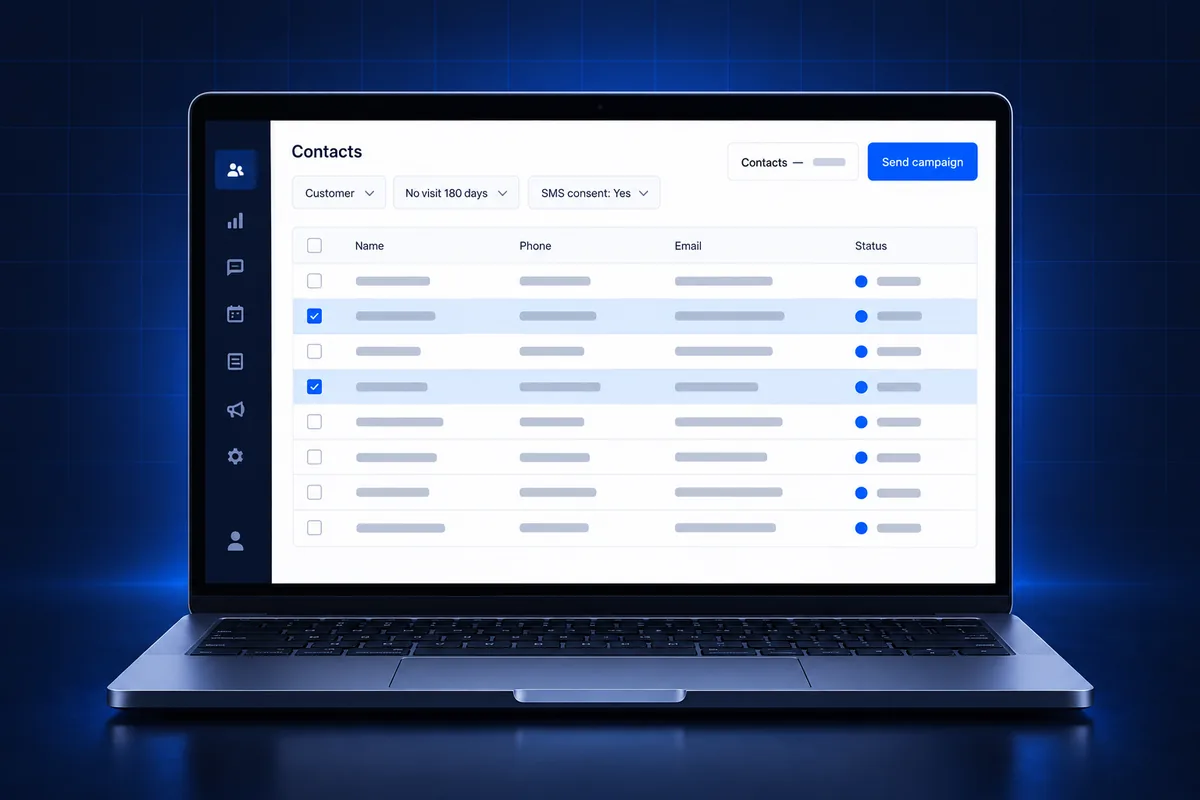
In GoHighLevel these segments are usually saved as Smart Lists built from tags, custom fields, opportunity status and last activity. If your contact data is messy, with duplicate contacts, tags nobody uses or customers who were never marked as won, fix that first. Our GoHighLevel CRM optimization guide covers the cleanup that makes segments trustworthy.
New to GoHighLevel? Try it free for 30 days
HighLevel's standard free trial is 14 days. Through our partner link you get 30 days plus HighLevel's free onboarding bootcamp. Rather have it built for you? Our US team sets up GoHighLevel accounts, websites, funnels and automations.
Partner link: we may earn a commission at no extra cost to you. Disclosure
Do you need consent before texting old customers?
Yes. A win-back text is marketing, so US rules for marketing texts apply even to people who bought from you before. A past purchase alone is not the same as consent to receive promotional SMS. You need a record that the contact agreed to receive texts from your business and has not opted out since.
Before a win-back list goes live, check these points:
- Proof of opt-in: where and when the contact agreed to texts (a form, a checkbox, a keyword) and what the consent language said.
- Opt-outs honored: anyone who replied STOP or asked to stop must stay out. In GoHighLevel, Do Not Disturb (DND) blocks the channel for that contact.
- Quiet hours: the federal telemarketing rules limit marketing calls and texts to between 8 a.m. and 9 p.m. in the recipient’s local time, and some states are stricter.
- Registered sending: US texting from a local number needs an approved A2P 10DLC brand and campaign whose use case covers marketing messages.
- Clear identity and opt-out: say who you are and how to stop, especially in the first message after a long gap.
Our guides to TCPA texting rules and SMS opt-in language go deeper on each point. This is general information, not legal advice; confirm with counsel for your situation, especially if your list came from an old system with unclear consent records.
Contacts without SMS consent are not lost. Email still reaches customers who gave you their address in a business relationship, as long as the email follows CAN-SPAM rules with a working unsubscribe link and your real business details.
Win back campaign examples by industry
Good win back campaign examples share three traits: they mention the specific service the customer had, they give one simple reason to act now, and they ask a question that is easy to answer. The examples below show the angle for each industry rather than a fixed script.
| Industry | Lapsed signal | Win-back angle | Example opener |
|---|---|---|---|
| Dental | Missed recall cleaning | Health reminder plus open times | “Hi Sam, it’s been a while since your last cleaning. Want me to check openings next week?” |
| HVAC | No tune-up this season | Seasonal check before peak demand | “Hi Ana, cooler weather is coming. Should we book your furnace check before the rush?” |
| Med spa | Treatment gap past the usual interval | Maintenance timing, not a discount | “Hi Jo, you’re about due for your next treatment. Want to see this month’s times?” |
| Fitness | Cancelled or frozen membership | A low-risk return offer | “Hi Lee, we’d love to have you back. Want a free week to try the new classes?” |
| Home services | One-time job, no repeat | Related service they may need | “Hi Kim, we cleaned your gutters last fall. Want us to look at them again before winter?” |
| Ecommerce or retail | No order in a long time | New products in a category they bought | “Hi Max, the refill you ordered last time is back in stock. Want the link?” |
Win back email campaign examples
Email gives you room for what SMS can’t hold: before-and-after photos, a list of what’s new, reviews or a short note from the owner. Strong win-back emails keep one call to action and a plain subject line, for example “Still need help with your lawn?” or “Your next cleaning is overdue”. Avoid subject lines that pretend to be a reply or an invoice; they get opens but lose trust.
Win back campaign ideas and offers that work
The best win back campaign ideas give lapsed customers a reason to act now without training them to wait for discounts. A real update, a timely reminder or a small, specific offer usually beats a large blanket discount, and it protects your margins on the customers who would have returned anyway.
- Timely reminder: the service is due, a season is changing, or a warranty or check-up window is closing.
- What’s new: a new service, new hours, a new location or a new team member they might like.
- Small, specific offer: a free add-on, priority booking or a fixed-dollar credit on the next visit.
- Feedback request: “Did we do something wrong?” often starts honest conversations and surfaces fixable problems.
- Personal check-in: a note from the owner or the technician they worked with.
- Loyalty status: remind them of points, credits or a package balance they still have.
If a discount is part of the plan, give it an end date and a reason. “We have three openings left this month” is honest when it is true and gives a natural deadline. Never invent scarcity you don’t have.
Should a win-back campaign use SMS, email or both?
Most win-back campaigns work best with both channels: SMS for a short, personal opener that gets a quick reply, and email for detail, proof and offers. SMS is only for contacts with text consent, so email often carries the campaign for the rest of the list.
| Factor | SMS | |
|---|---|---|
| Best for | Short opener, a question, booking replies | Detail, photos, offers, what’s new |
| Consent | Express consent for marketing texts | CAN-SPAM rules; unsubscribe link required |
| Setup in GoHighLevel | LC-Phone or another provider with approved A2P 10DLC | LC-Email or your own domain with SPF, DKIM and DMARC |
| Main risk | Carrier filtering and opt-outs if the message feels like spam | Spam folder if the old list has bounces and stale addresses |
| Ideal length | One or two short sentences | A short note with one call to action |
Old email lists carry their own risk. Addresses go stale, and a burst of bounces to a long-dormant list can hurt your sender reputation. Validate the list, send in smaller batches and make sure your sending domain is authenticated before the first send.
Replies matter more than clicks. When someone answers a text, the conversation needs a fast human or AI response. Conversation AI can qualify and offer a booking slot; our AI appointment setter guide compares that with a human setter.
When should you send, and when should you stop?
Send a win-back message soon after a customer passes their normal repeat window, space follow-ups days apart rather than hours, and stop the sequence for each person the moment they reply, book, buy or opt out. A short sequence of a few touches usually beats a long one.
- Start: shortly after the customer misses their usual cycle, while they still remember you.
- Spacing: give each touch time to land; a text, then an email a few days later, then a final note.
- Send window: business hours in the contact’s time zone, inside the legal quiet hours.
- Stop on reply: anyone who replies leaves the automated sequence and gets a real conversation.
- Stop on purchase: a booking or order ends the campaign, so no one gets an offer after paying full price.
- Final message: close the loop politely, then move non-responders to a lower-frequency email list or suppress them.
GoHighLevel workflows have settings for exactly these guardrails, such as a time window for sends, contact time zones and stopping a contact when they respond. The exact build is part of the service we deliver, but the principle is simple: no one should ever get the next message after they have already answered.
How do you measure a win-back campaign?
Measure a win-back campaign by revenue from returning customers, not by opens. Track replies, bookings or orders and the value of those sales against the list size, and compare with a holdout group that got no messages so you can see what the campaign actually caused.
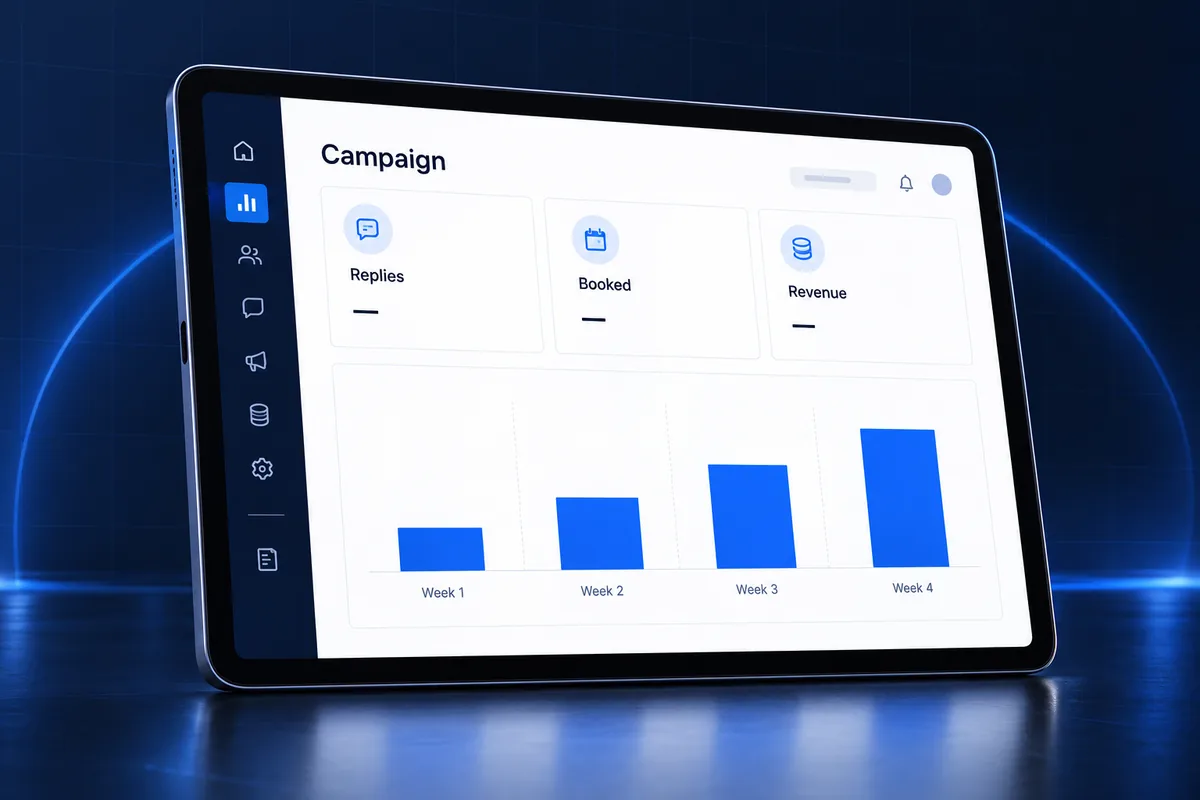
| Metric | What it tells you | Where to see it in GoHighLevel |
|---|---|---|
| Reply rate | Whether the opener feels personal | Conversations and campaign stats |
| Bookings or orders | Whether replies turn into business | Calendars, opportunities, payments |
| Revived revenue | The money the campaign brought back | Opportunity values marked won, invoices |
| Opt-out rate | Whether the list or message is wrong | DND status and opt-out tags |
| Delivery failures | Stale numbers, filtering or A2P problems | Message status and workflow logs |
A holdout group is the one step most win-back guides skip. Some lapsed customers would have come back on their own. Leave a small random slice of the segment out of the campaign and compare return rates, and you learn the true lift instead of taking credit for every return.
Also note why people say they left. Those replies are some of the most useful feedback a business gets, and fixing the cause stops the next group from lapsing.
What are the most common win-back campaign mistakes?
The most common win-back campaign mistakes are texting contacts without consent, sending one generic message to the whole database, leading with a big discount, and letting automation keep messaging people who already replied. Each one costs either trust, margin or carrier standing.
- Mixing customers and cold leads: “welcome back” confuses someone who never bought.
- Ignoring old opt-outs: contacts imported from an old system may have opted out there; carry that status over.
- Sending from an unregistered number: unregistered 10DLC traffic gets filtered, so the campaign silently fails.
- Too many touches: long sequences raise opt-outs and carrier complaints.
- No owner for replies: a reply that waits a day is a lost booking; our speed to lead guide explains why response time matters.
- Measuring opens only: privacy features inflate email opens; revenue and bookings are the honest numbers.
Sitting on a list of past customers who went quiet?
If your CRM holds hundreds of past customers and nobody has contacted them in months, that list is the cheapest revenue you have. Our team runs done-for-you database reactivation campaigns in GoHighLevel: we clean the list, separate contacts with valid consent, write short conversational messages, send in controlled batches and route every interested reply into your pipeline with a booking link.
If your texts aren’t registered yet, we also handle A2P 10DLC registration for a $50 flat service charge, so the campaign isn’t filtered on day one. You can compare packages on our pricing page, or message us on WhatsApp with a quick question.
Frequently Asked Questions
What is a good offer for a win-back campaign?
A good win-back offer is specific, has an end date and fits the service the customer used before. A free add-on, priority booking or a fixed credit on the next visit often works as well as a large discount. Many lapsed customers only need a timely reminder, so test a no-discount message before giving margin away.
How long before a customer counts as lapsed?
A customer counts as lapsed once they pass the normal gap between purchases for your business. That might be one missed recall for a dentist, one skipped season for HVAC or a few missed months for a gym. Look at how often your loyal customers return and set the win-back trigger just after that window.
Can I text old customers who bought from me before?
Only if they agreed to receive marketing texts from your business and haven’t opted out since. A past purchase by itself isn’t consent for promotional SMS. Check your opt-in records, keep opted-out contacts out, send inside quiet hours and use a registered A2P 10DLC campaign. Confirm the details with counsel for your situation.
How many messages should a win-back sequence have?
A win-back sequence usually works with a few touches spread over a couple of weeks: a short personal text or email, a follow-up with more detail or an offer, and a final polite note. Stop each contact as soon as they reply, book or opt out. Longer sequences mostly add opt-outs, not sales.
What is the difference between win-back and database reactivation?
Win-back targets past customers who bought and then stopped. Database reactivation is broader and also includes old leads who asked about your service but never bought. The tactics overlap, but the message differs: past customers can be reminded of their last service, while cold leads need a fresh reason to trust you.
Can GoHighLevel run a win-back campaign automatically?
Yes. GoHighLevel can segment lapsed customers with Smart Lists, tags and custom fields, send SMS and email through workflows, pause sends outside a time window, stop a contact when they reply and pass interested replies to Conversation AI or your team. Results show up in opportunities, calendars and payments, so you can track revived revenue.