
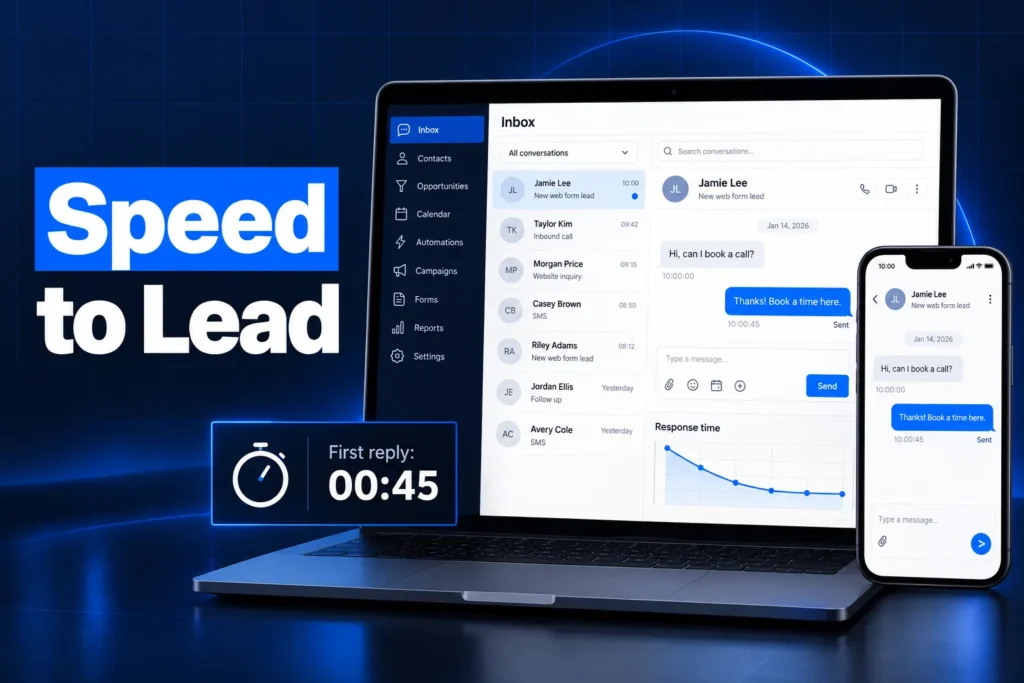
Speed to lead is the time between a new inquiry, such as a form fill, missed call or ad lead, and your business’s first real response. The shorter that gap, the more likely you reach the person while they are still interested and before a competitor does. For most small businesses, automation is the only way to respond in minutes, every time.
This guide explains what speed to lead means, what the research says, where small businesses lose time, the instant-response options inside GoHighLevel, how human handoff should work, and how to measure response time so it keeps improving.
What does speed to lead mean?
Speed to lead means how quickly a business makes first contact with a new lead after the lead raises a hand. It is measured from the moment of the inquiry, a call, form, chat or ad submission, to the first meaningful reply by text, call or email. Lower is better, and consistency matters as much as the average.
Speed to lead is a sales and marketing metric, not a software feature. Software only makes a fast response repeatable.
- Lead response time: the same idea, usually reported as an average or median per source.
- First touch vs first conversation: an automatic text is a first touch; a live reply or booked call is the first conversation. Track both.
- Coverage: the share of leads that get any response at all. A fast average hides leads that never hear back.
What does the research say about lead response time?
Research on lead response time consistently finds that faster contact leads to more qualified conversations. The best-known study, “The Short Life of Online Sales Leads” by Oldroyd, McElheran and Elkington in Harvard Business Review (2011), found that most companies respond to online leads far too slowly, and that contact within the first hour sharply improves the odds of qualifying a lead.
The practical lesson is simple. Interest fades quickly after an inquiry, and many buyers contact several businesses at once. Whoever starts a useful conversation first has the advantage.
- Response speed matters most for high-intent sources: calls, quote forms and booking requests.
- The first hour is the window that research highlights; minutes are better than hours.
- Persistence still matters: a single attempt, however fast, misses people who are busy at that moment.
Be careful with speed-to-lead statistics you see online. Many are vendor claims attributed to studies that do not contain them, so check the original source before repeating a number.
New to GoHighLevel? Try it free for 30 days
HighLevel's standard free trial is 14 days. Through our partner link you get 30 days plus HighLevel's free onboarding bootcamp. Rather have it built for you? Our US team sets up GoHighLevel accounts, websites, funnels and automations.
Partner link: we may earn a commission at no extra cost to you. Disclosure
Where do small businesses lose time on new leads?
Small businesses lose time on new leads in predictable places: missed calls that wait for voicemail checks, form notifications buried in an inbox, ad leads sitting in a separate platform, after-hours inquiries that wait until morning, and handoffs where nobody owns the reply. Each gap is a process problem that automation can close.
| Lead source | Typical delay | Why it happens |
|---|---|---|
| Phone calls | Hours, or never | The team is on a job; voicemails are checked later or not at all. |
| Website forms | Hours to a day | Notifications go to a shared inbox nobody watches. |
| Facebook Lead Ads | Hours to days | Leads sit in the ad platform until someone downloads them. |
| After-hours inquiries | Overnight | No one is working, so nothing goes out until morning. |
| Chat widget | Minutes to hours | No live coverage, so visitors leave before a reply. |
The fix is not working longer hours. It is making sure every source lands in one CRM and triggers an immediate, personal first reply.
How can GoHighLevel respond to leads instantly?
GoHighLevel responds to leads instantly by routing every source, calls, forms, funnels, chat and Facebook Lead Ads, into one sub-account, where workflows send an immediate SMS or email, notify the team and offer a booking link. Conversation AI and Voice AI can also answer questions and book appointments when nobody is free.
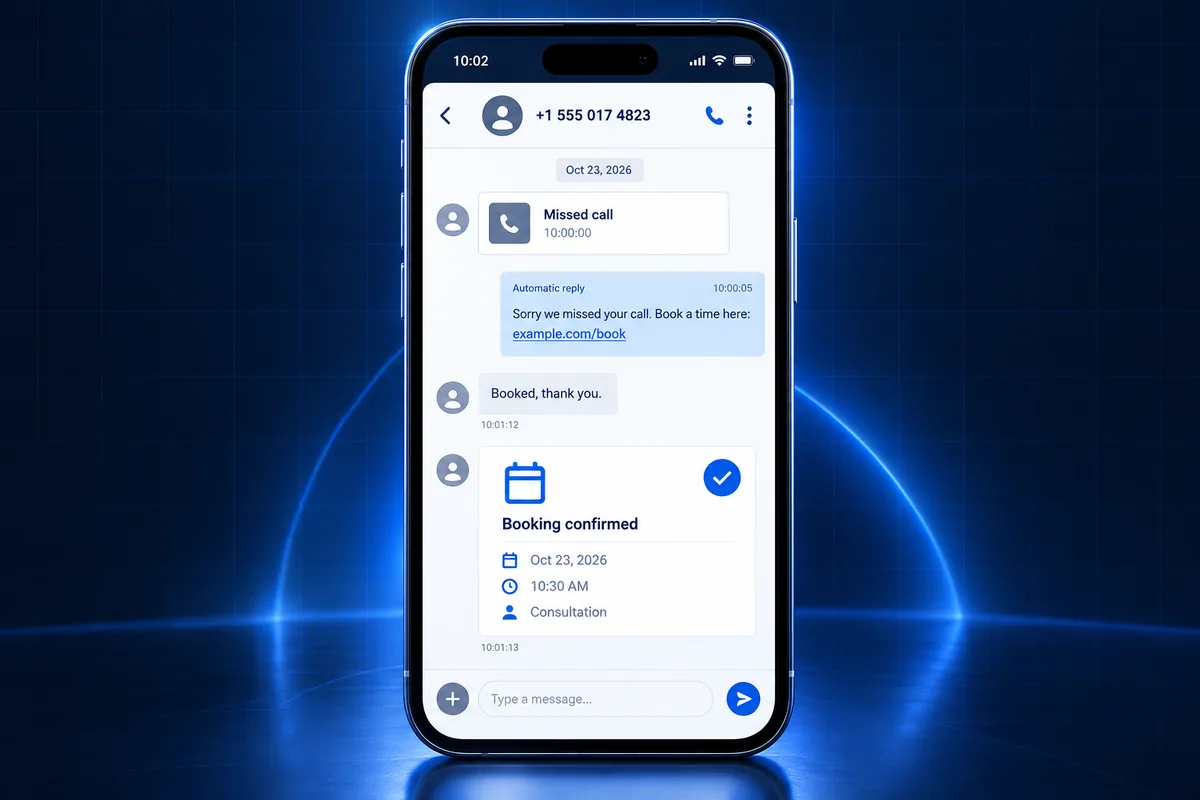
Missed-call text-back
When a call to your LC Phone number goes unanswered, a missed-call text-back sends the caller an SMS within seconds, inviting a reply or a booking. It turns the most expensive lost lead, a caller ready to buy, into a conversation. Our missed-call text-back and speed-to-lead service builds and tests this on your own numbers.
Instant form and ad follow-up
Form fills, funnel opt-ins and Facebook Lead Ads create a contact and an opportunity in the pipeline, then trigger a personal SMS and email that use the lead’s details. The message points to a calendar so interested leads can book themselves, and the team gets an alert at the same time.
AI first response
Conversation AI can reply to SMS, web chat and social messages, answer common questions from your business information and offer times to book. Voice AI can answer inbound calls. Both work best as the first responder, with a clear path to a person. See how an AI appointment setter compares with a human setter, or our Voice AI and Conversation AI setup.
How should human handoff and routing work?
Human handoff should start the moment a lead replies or shows buying intent. Automation sends the first message and keeps the lead warm; a named person then takes over with full context in the GoHighLevel conversation inbox. Routing rules decide who that person is, so no lead waits while the team works out ownership.
- Assignment: assign each new lead to a user by source, service area or round-robin, so ownership is never unclear.
- Alerts: notify the owner by app push, SMS or email when a lead replies.
- Pause automation on reply: stop the follow-up sequence once a real conversation starts, so the lead does not get robotic messages mid-chat.
- Escalation: if nobody answers within your set window, reassign or alert a manager.
- Context: keep call recordings, form answers and messages on the contact record so the person picking up does not ask the same questions again.
What compliance rules apply to fast texting and calling?
Fast texting and calling still have to follow US rules. Business texting from a local number needs A2P 10DLC brand and campaign registration with The Campaign Registry, messages need consent, and opt-outs such as STOP must be honored. Speed never replaces consent; an instant reply to someone who asked to be contacted is the goal.
- Register your brand and campaign before texting at scale; our A2P 10DLC registration service is a $50 flat service charge plus carrier fees.
- Use clear consent language on every form; see our guide to SMS opt-in language.
- Authenticate your email sending domain with DKIM, SPF and DMARC so instant emails reach the inbox.
- Respect quiet hours for automated follow-ups beyond the first reply to an inquiry.
This is general information, not legal advice. Confirm your situation with counsel, especially for calling and AI voice.
How do you measure speed to lead?
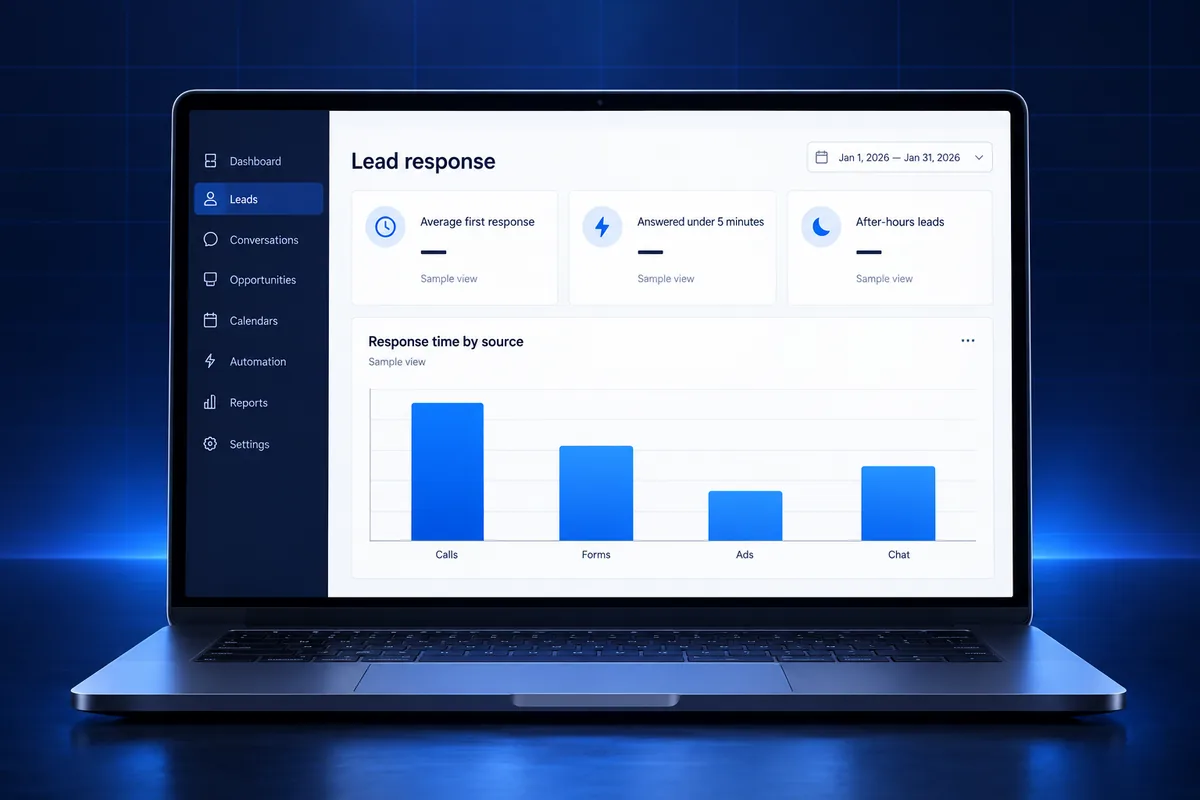
You measure speed to lead by recording when each lead arrived and when the first response went out, then reviewing the median, the slowest cases and the share of leads with no response, broken down by source and by team member. GoHighLevel’s contact timeline, conversations and pipeline reports hold the data you need.
| Metric | What it tells you |
|---|---|
| Median first response time | Typical speed, less distorted by outliers than the average. |
| Leads with no response | Coverage gaps, the most expensive problem. |
| Response time by source | Which channel needs fixing first. |
| Time to first live conversation | How quickly a person takes over after the automatic touch. |
| Booked appointments per lead source | Whether faster response is turning into revenue. |
Test it yourself every month: call your own number after hours, fill out each form and submit a test ad lead. If any path is slow or silent, fix it before buying more leads.
How does speed to lead differ by industry?
Speed to lead matters most where buyers contact several providers at once and decide quickly, such as home services, real estate, legal intake and medical or dental bookings. In slower, considered purchases, fast first contact still matters, but persistence and useful follow-up over days carry more weight.
- Home services: emergency calls go to whoever answers; missed-call text-back is the first fix.
- Real estate: portal and ad leads often inquire with several agents; instant replies with a booking link win showings.
- Clinics and med spas: booking requests need fast confirmation, with care around health information in texts.
- B2B services: a fast personal email plus a call within the hour sets the tone for a longer sales cycle.
Old leads that never got a fast reply are not lost. A consent-aware database reactivation campaign can restart those conversations.
Still losing leads to slow replies?
If leads still wait hours for a reply, the problem is usually a missing path: a phone number without text-back, a form that only emails, or ad leads that never reach the CRM. Closing those gaps is a setup job, not a staffing one, and it pays off on the leads you already buy.
We map every lead source, write the messages in your voice, build the instant replies and test each path end to end. Compare packages on our pricing section, or message us on WhatsApp with a quick question.
Frequently Asked Questions
What is a good speed to lead time?
A good speed to lead time is minutes, not hours. Research such as the 2011 Harvard Business Review study on online sales leads points to the first hour as critical, and an automatic text or email can go out within seconds. Aim for an instant automated first touch and a live conversation as soon as a person is free.
What is speed to lead automation?
Speed to lead automation is software that responds to new leads the moment they arrive, without waiting for a person. In GoHighLevel it covers missed-call text-back, instant SMS and email after form fills or ad leads, team alerts, booking links and AI replies. It guarantees a fast first touch so your team can focus on real conversations.
How does AI help with speed to lead?
AI helps with speed to lead by answering new inquiries immediately at any hour. GoHighLevel’s Conversation AI can reply to texts and chat, answer common questions and offer booking times, while Voice AI can answer calls. AI works best as the first responder, handing hot leads to a person with the full conversation attached.
Why is speed to lead important in real estate?
Speed to lead is important in real estate because buyers and sellers often inquire with several agents at once, through portals, ads and websites. The agent who replies first with something useful, such as available showing times, usually earns the conversation. Instant text replies and booking links keep agents responsive while they are at showings.
Do I need A2P registration to text new leads instantly?
Yes, if you text US mobile numbers from a local 10-digit business number. A2P 10DLC brand and campaign registration with The Campaign Registry is required for reliable delivery, and leads must have given consent. Toll-free numbers use a separate verification process. Register before turning on instant SMS follow-up so messages are not filtered.
How do I track lead response time in GoHighLevel?
Track lead response time in GoHighLevel by comparing when a contact was created with the first outbound message or call on its timeline and in the conversations view. Review it by source and user, and watch for leads with no outbound activity. Pipeline and appointment reports then show whether faster replies are producing more bookings.